I'll just say it: Hawaii ruined every other beach vacation for me. Not because the beaches are necessarily better than the Caribbean or Southeast Asia — though some of them absolutely are — but because Hawaii gives you everything else on top of the beaches. Active volcanoes you can walk up to. Rainforest hikes that end at waterfalls taller than most buildings. Food that fuses Japanese, Filipino, Portuguese, and Native Hawaiian traditions into something you genuinely can't get anywhere else. And all of it is still the United States, which means no passport, no currency exchange, and your cell plan just works.
The trick with Hawaii is that each island has a completely different personality. Oahu is the urban-meets-beach energy. Maui is the luxury resort strip plus jaw-dropping drives. Big Island is volcanoes and black sand beaches. Kauai is untouched jungle that looks like Jurassic Park — because it literally was. You could visit all four and have four entirely different vacations.
Here are the 14 experiences I'd tell any first-timer (or fifth-timer) not to skip.
1. Watch the Sunrise From Haleakalā Summit
Standing at 10,023 feet above sea level in the dark, wrapped in every layer you brought, watching the sun break over a volcanic crater that looks like the surface of Mars — this is one of those life moments that actually lives up to the hype. Haleakalā on Maui is the most popular sunrise experience in Hawaii, and for good reason. The crater below you stretches seven miles across, and as the light hits the cinder cones and volcanic ash, the colors shift from deep purple to orange to gold in a way that no photo fully captures.
You'll need to wake up around 2-3 AM to make the drive from most Maui resorts. It's cold at the top — often in the 30s-40s°F — so bring real layers, not just a hoodie.
What it costs: Sunrise viewing requires a reservation through recreation.gov at $1 per vehicle (plus the $30 national park entry fee). Reservations release 60 days in advance and sell out fast. Guided sunrise tours run $150–$250 per person and include transport and breakfast.
2. Drive the Road to Hana
The Road to Hana on Maui is 64 miles of narrow, winding highway with 620 curves and 59 bridges — and somehow it's one of the most beloved drives in America. The key is to treat it as the destination, not the drive. Stop constantly. Every pullover reveals a waterfall, a bamboo forest, a black sand beach, or a roadside banana bread stand that's better than it has any right to be.
Top stops include Twin Falls (easy, family-friendly waterfall), Wai'anapanapa State Park (the famous black sand beach — reservation required), and the Pools of 'Ohe'o near the Kīpahulu entrance to Haleakalā National Park. The drive takes all day — leave by 8 AM and don't rush.
What it costs: Free to drive. Wai'anapanapa State Park reservation is $5 per person. Haleakalā's Kīpahulu entrance is $30 per vehicle (same pass works for the summit). A private guided tour costs $200–$350 per person.
3. Snorkel Molokini Crater
Molokini is a partially submerged volcanic crater sitting about three miles off Maui's southwest coast, and snorkeling inside it is like swimming in a natural aquarium. The crescent-shaped walls block the ocean current, creating water so clear that visibility regularly exceeds 150 feet. Over 250 species of fish live in and around the crater, many of them endemic to Hawaii.
Morning trips are best — the water is calmest and clearest before afternoon winds pick up. Most tours also stop at Turtle Town on the way back, where green sea turtles are practically guaranteed.
What it costs: Boat tours from Ma'alaea Harbor run $130–$200 per person for a 4-5 hour trip including snorkel gear, breakfast, and lunch. Premium catamaran tours go up to $250+.
4. Hike Diamond Head on Oahu
Diamond Head is Hawaii's most iconic hike — a 1.6-mile round trip up a 300,000-year-old volcanic crater overlooking Waikiki. It's not particularly long or strenuous, but the 360-degree views from the summit are spectacular: Waikiki Beach laid out below you, downtown Honolulu to the west, and open Pacific in every other direction.
The hike includes stairs and a dark tunnel near the top. Go early morning to beat both the heat and the crowds — by 10 AM, the trail can feel like a highway.
What it costs: Entry requires advance reservations at $5 per person (non-residents). Parking is limited; Uber from Waikiki is about $10–$15. Allow 1.5–2 hours for the full hike.
5. Explore Hawai'i Volcanoes National Park
Big Island's Volcanoes National Park is one of the most active volcanic landscapes on Earth. Kīlauea has erupted 38 times in 2025 alone — nearly weekly — and the park gives you safe access to see lava flows, steam vents, sulfur banks, and lava tubes up close. Walking through the Thurston Lava Tube — a massive underground tunnel carved by flowing lava — is an experience you won't find at any other national park.
The Crater Rim Trail offers views directly into the Kīlauea caldera, and on eruption nights, the glow of lava reflecting off the volcanic gas clouds is genuinely otherworldly. Check the NPS website before visiting for current eruption status and trail closures.
What it costs: Park entry is $30 per vehicle, valid for 7 days. All trails and the lava tube are free beyond that. Guided volcano tours from Kona or Hilo run $180–$300 per person and include hotel pickup.
6. Visit Pearl Harbor
The USS Arizona Memorial is one of those places that hits you harder than you expect. You take a Navy boat out to the memorial, which sits directly above the sunken battleship, and you can still see oil rising to the surface — more than 80 years later. It's a solemn, powerful experience that connects you to history in a way that textbooks never could.
The visitor center on shore includes museums, exhibits, and the option to visit the USS Missouri (where Japan signed the surrender) and the USS Bowfin submarine. Plan for at least half a day.
What it costs: The USS Arizona Memorial program is free, but timed-entry tickets are required and release 60 days in advance — they sell out extremely fast. The USS Missouri tour costs $35 per adult. The full Pearl Harbor passport (all sites) is $89 per adult.
7. Chase Waterfalls on Kauai's Nā Pali Coast
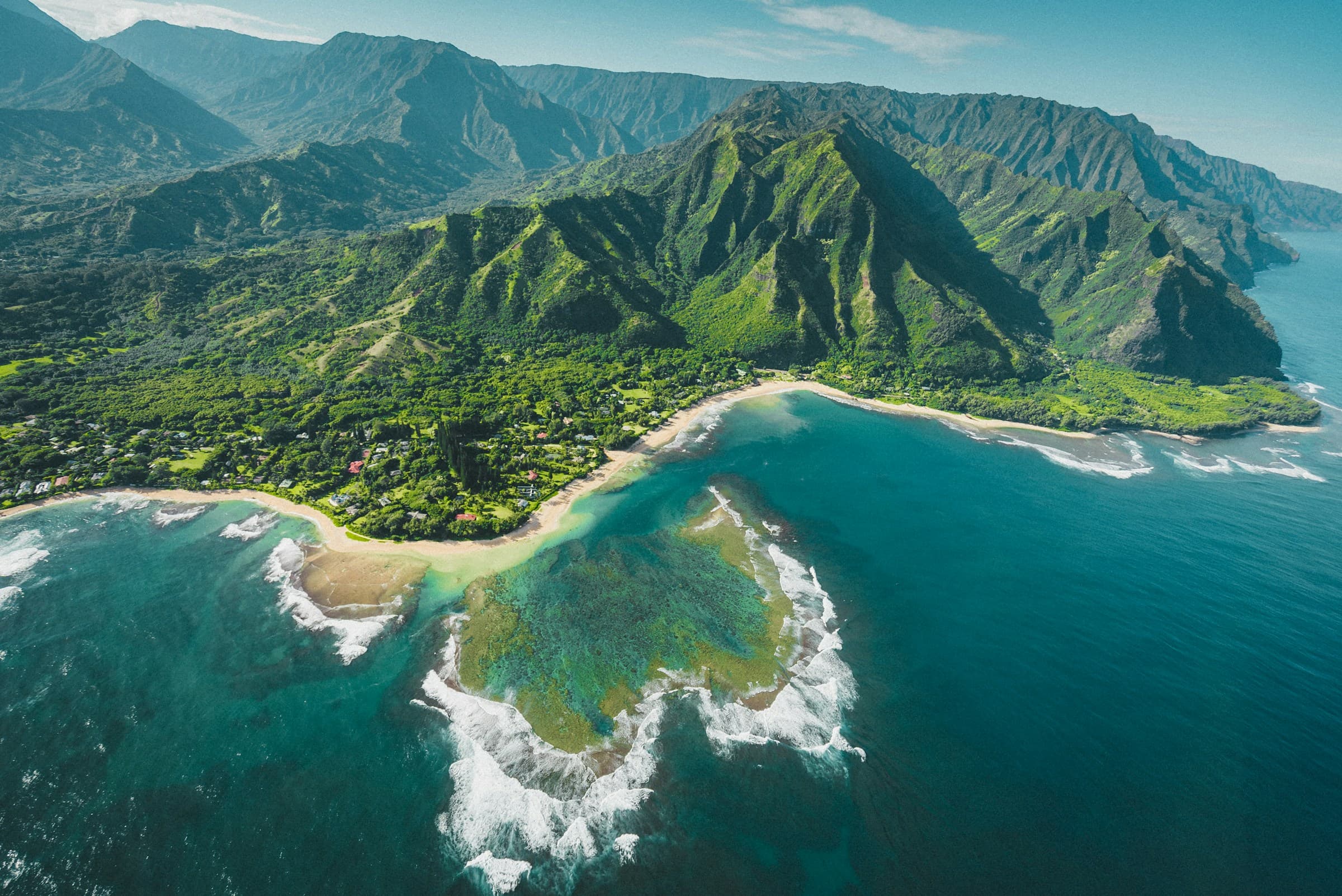
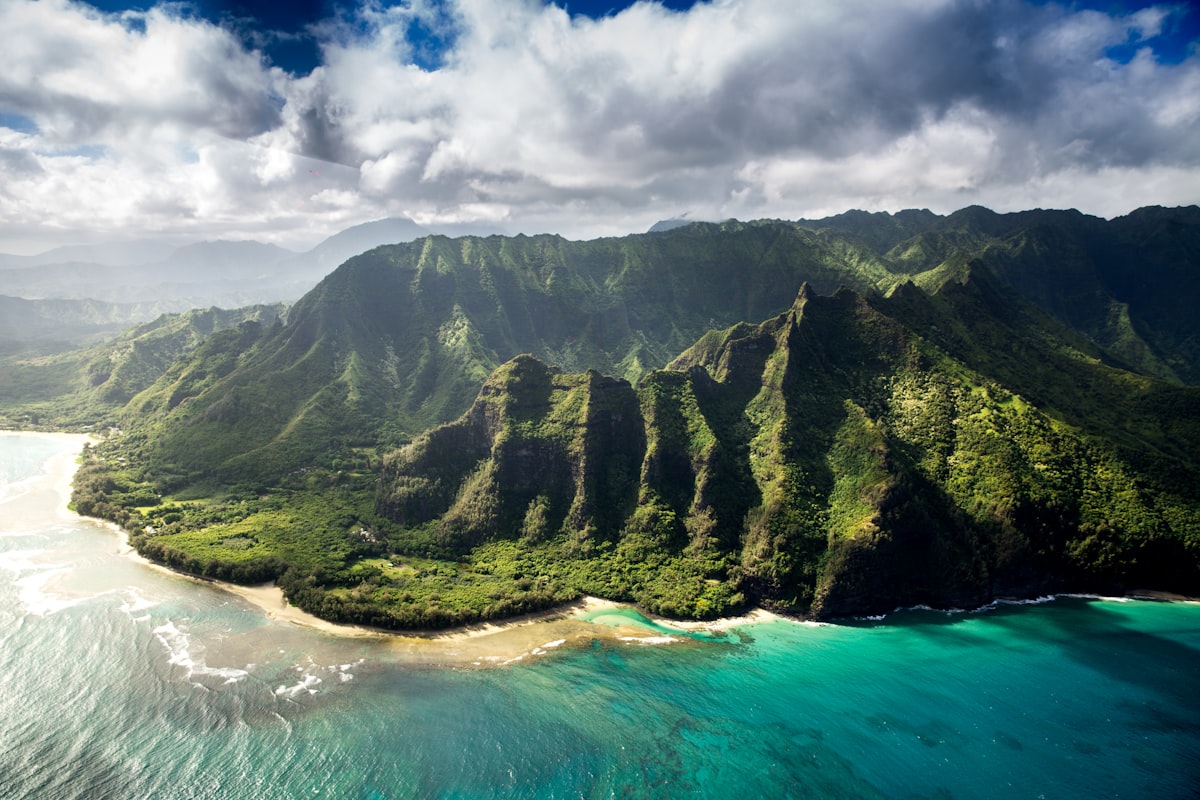
Kauai's Nā Pali Coast is 17 miles of sea cliffs, hanging valleys, and waterfalls that are only accessible by trail, boat, or helicopter. The Kalalau Trail is an 11-mile one-way trek along the cliffs — it's strenuous, requires permits, and takes most hikers two days. But even the first two miles to Hanakapi'ai Beach offer some of the most dramatic coastal scenery in the world.
If hiking isn't your thing, boat tours along the coast are spectacular, and helicopter tours reveal hidden waterfalls in valleys you can't reach on foot. The Jurassic Park waterfall (Manawaiopuna Falls) is on private land and only accessible by helicopter.
What it costs: Kalalau Trail permits cost $35 per person per night (reserve months in advance). Nā Pali boat tours run $150–$230 per person. Helicopter tours start at $250–$350 per person for a 50-60 minute flight.
8. Eat Your Way Through a Plate Lunch Tour
Hawaii's plate lunch is one of America's great regional food traditions: two scoops of rice, a scoop of macaroni salad, and a protein — usually teriyaki chicken, kalua pork, or loco moco (hamburger patty, fried egg, gravy). It sounds simple, but the best plate lunch spots have perfected these combos over decades.
On Oahu, Rainbow Drive-In in Kapahulu has been serving plate lunches since 1961. On Maui, Tin Roof (from Top Chef's Sheldon Simeon) elevates the form. On Big Island, Café 100 in Hilo claims to have invented the loco moco. And everywhere, roadside poke bowls with fish so fresh it was probably swimming that morning make mainland poke shops feel like sad imitations.
What it costs: Plate lunches run $10–$16 at most spots. Poke bowls are $12–$20. A full day of eating your way through the best spots on any island tops out around $50–$70 per person — one of Hawaii's genuine bargains.
9. Take a Helicopter Tour of Kauai
Kauai is called the Garden Island, and about 90% of it is inaccessible by road. The only way to see Waimea Canyon (the "Grand Canyon of the Pacific"), the interior valleys, and the hidden waterfalls of the Nā Pali Coast is from the air. A helicopter tour of Kauai is legitimately one of the most jaw-dropping scenic experiences on Earth.
Doors-off flights offer unobstructed views and better photography, though they're not for the faint of heart. Most tours last 50-65 minutes and cover the entire island.
What it costs: Helicopter tours range from $250–$400 per person depending on duration and operator. Doors-off options are typically at the higher end. Book well in advance — popular operators sell out weeks ahead.
10. Swim With Manta Rays at Night
Off the Kona Coast on Big Island, manta rays with wingspans of up to 16 feet gather nightly to feed on plankton attracted by underwater lights. You float on the surface with a snorkel, holding onto a lit surfboard, and watch these gentle giants glide directly beneath you — sometimes close enough to touch (though you shouldn't).
It's one of Hawaii's most magical wildlife encounters and regularly appears on "bucket list" roundups. The experience runs about an hour in the water, and encounters are nearly guaranteed since the same rays return nightly.
What it costs: Guided snorkel tours run $100–$150 per person. Scuba diving with manta rays costs $175–$250. Most operators include all gear and run trips from Keauhou Bay or Honokohau Harbor.
11. Surf (or Watch Surfing) on Oahu's North Shore
Oahu's North Shore is where modern surfing was born, and during winter months (November–February), the waves at Pipeline, Sunset Beach, and Waimea Bay regularly reach 30-50 feet. Even if you don't surf, watching professional surfers take on these waves from the beach is mesmerizing — and completely free.
During summer, the same beaches flatten out to gentle rollers that are perfect for beginner lessons. The town of Haleiwa is the North Shore's hub, with surf shops, shrimp trucks (Giovanni's is the most famous), and a laid-back vibe that feels a world away from Waikiki.
What it costs: Watching the surf is free. Beginner surf lessons on calmer beaches run $100–$150 per person for a 2-hour group lesson. Giovanni's shrimp plate is about $16. Haleiwa is a 45-minute drive from Waikiki.
12. Stargaze From Mauna Kea
Mauna Kea on Big Island stands at 13,796 feet — the tallest mountain in the world when measured from its oceanic base. At that altitude, above the clouds and far from light pollution, the night sky is among the clearest on Earth. It's why the summit hosts some of the world's most powerful telescopes.
The Visitor Information Station at 9,200 feet offers free stargazing programs with telescopes several evenings a week. Driving to the summit for sunset is an option with a 4WD vehicle, but the altitude is serious — allow time to acclimate and bring warm clothes. It can drop below freezing at the top even in summer.
What it costs: The VIS stargazing program is free. Guided summit sunset and stargazing tours run $200–$280 per person including 4WD transport and winter jackets. These are worth it if you don't have a 4WD rental.
13. Kayak to the Mokulua Islands
Off the windward coast of Oahu, the twin Mokulua Islands (Mokes) sit about a mile offshore from Lanikai Beach — consistently rated one of the best beaches in the world. The paddle out takes about 30-45 minutes in open ocean, and you land on a pristine, nearly deserted beach with sea bird colonies and some of the clearest water you'll find on Oahu.
Only Moku Nui (the larger island) allows landing. Bring water, sunscreen, and a dry bag — there are no facilities. The paddle back can be harder against afternoon winds, so start early.
What it costs: Kayak rentals start around $70–$90 for a tandem (half day). Guided kayak tours to the Mokes run $130–$175 per person including gear and instruction. Lanikai Beach itself is free.
14. Attend a Luau Worth Attending
Most resort luaus are overpriced tourist traps. But a handful are genuinely spectacular cultural experiences. The Old Lahaina Luau on Maui has been the gold standard for decades — authentic hula, live music, an imu ceremony (underground oven, similar to Fiji's lovo), and a buffet that's actually good. On Oahu, Ka Moana Luau at Sea Life Park combines ocean views with solid performances.
The best luaus sell out weeks in advance, so book before you arrive. Expect a 2.5-3 hour evening that includes a welcome cocktail, dinner, and a full Polynesian performance.
What it costs: Quality luaus range from $110–$180 per adult and $70–$100 for children. The Old Lahaina Luau is about $140 per adult for standard seating. Budget options exist for $80–$90, but the experience drop-off is significant.
How to Book Hawaii With Points
Hawaii has arguably the deepest points hotel inventory of any vacation destination in the world. Here are the best plays:
Hyatt — The Best Value Play
Hyatt properties in Hawaii are where points travelers get the most bang for their buck:- Andaz Maui at Wailea: Category 8 — 35,000 off-peak / 40,000 standard / 45,000 peak points per night. Cash rates run $700–$1,000+/night in Wailea, making this one of the best CPP redemptions in the Hyatt portfolio at 1.8–2.5+ CPP. After May 2026, the new "Top" rate will jump to 75,000 points — book now if you can.
- Grand Hyatt Kauai: Category 7 — 25,000–35,000 points/night. Stunning property on Poipu Beach. Cash rates $500–$800+.
- Hyatt Regency Maui: Category 7 — 25,000–35,000 points/night on Kaanapali Beach. Cash rates $400–$700.
- Hyatt Regency Waikiki: Category 6 — 20,000–28,000 points/night in the heart of Waikiki.
Transfer path: Chase UR → Hyatt at 1:1. A five-night Andaz Maui stay at 40,000/night = 200,000 UR (160,000 after the 5th night free with Globalist status) vs. $4,000+ cash = 2.0+ CPP.
Hilton — Volume Play
Hilton has a massive Hawaii footprint:- Hilton Hawaiian Village Waikiki: 80,000 Hilton Honors points/night for standard resort view rooms (dynamic pricing — upgraded rooms range from 93,000 to 142,000+). Cash rates $335–$500+. Note: resort fee of $55/night still applies on award stays.
- Hilton Waikoloa Village (Big Island): 50,000–70,000 HH/night.
- Grand Wailea Maui (Waldorf Astoria): Premium property — expect 120,000–180,000+ HH/night under dynamic pricing.
Marriott — Widespread but Pricey
Marriott has the most properties in Hawaii, but dynamic pricing means points costs are often steep:- Ritz-Carlton Kapalua (Maui): 60,000–85,000 Bonvoy/night (Category 7, starts ~72K in low season)
- Sheraton Waikiki: 50,000–70,000 Bonvoy/night (~61K for sample May 2026 dates)
- Westin Maui: 50,000–70,000 Bonvoy/night
- Wailea Beach Resort (Marriott): 50,000–80,000 Bonvoy/night
Getting There With Miles
Hawaii flights are a points sweet spot from the mainland:
- Alaska/Hawaiian (Atmos Rewards): The merged program offers flights from the West Coast starting at 12,500 points one-way in economy, 30,000 points in first class. This is the best value for direct flights.
- Southwest Rapid Rewards: Dynamic pricing, but deals as low as 6,500–9,000 points one-way from the West Coast pop up regularly. The Companion Pass doubles the value — two people fly for the price of one.
- American Airlines: 22,500 AAdvantage miles one-way in economy from the mainland.
- United MileagePlus: 22,500 miles one-way in economy for saver awards.
Practical Tips
Which island first? If it's your first trip, Maui or Oahu. Maui gives you the best all-around experience (beaches, hiking, food, Road to Hana). Oahu gives you Pearl Harbor, North Shore, and Waikiki. Big Island and Kauai are for return visitors who want volcanoes or untouched nature.
When to go: There's no bad time. Summer (June–August) and winter holidays are peak season with higher prices and crowds. Shoulder months (April–May, September–October) offer the best balance of weather, availability, and pricing.
Getting around: Rent a car on every island except Waikiki (where you don't need one). Hawaii car rentals have gotten expensive — $80–$150/day is common. Book early.
Island hopping: Southwest, Hawaiian, and Mokulele Airlines run inter-island flights. Southwest inter-island flights can go as low as 3,000–5,000 Rapid Rewards points one-way.
Resort fees: Hawaii is notorious for resort fees ($50–$55/night at major resorts). Hyatt waives them on award stays. Marriott and Hilton do not. Factor this into your points calculations.
Bottom Line
Hawaii isn't the cheapest vacation, but it might be the most rewarding one — and points can take a serious chunk out of the cost. The Andaz Maui at 35,000–45,000 Hyatt points versus $700–$1,000 cash is one of the best hotel redemptions in the world. Alaska/Hawaiian's merged program gets you there for as little as 12,500 points from the West Coast. And Southwest's Companion Pass turns every Hawaii flight into a two-for-one deal.
What makes Hawaii different from other beach destinations isn't any single thing — it's the combination. You hike a volcanic crater at sunrise, snorkel a submerged caldera before lunch, eat plate lunches that cost less than a Waikiki parking meter, and watch manta rays the size of small cars glide beneath you after dark. Try fitting all of that into a single day anywhere else.
Four islands, fourteen experiences, zero passports required. Book the Andaz, catch a Southwest sale, and go find out why people keep coming back.
Share this article
Travel.free Team
The Travel.free editorial team covers points strategy, destination guides, and deal alerts to help you travel better for less.
Stay in the Loop
Get the best travel points deals, island guides, and credit card strategies delivered weekly.
No spam, ever. Unsubscribe with one click.