1. Spend a Day at Eagle Beach
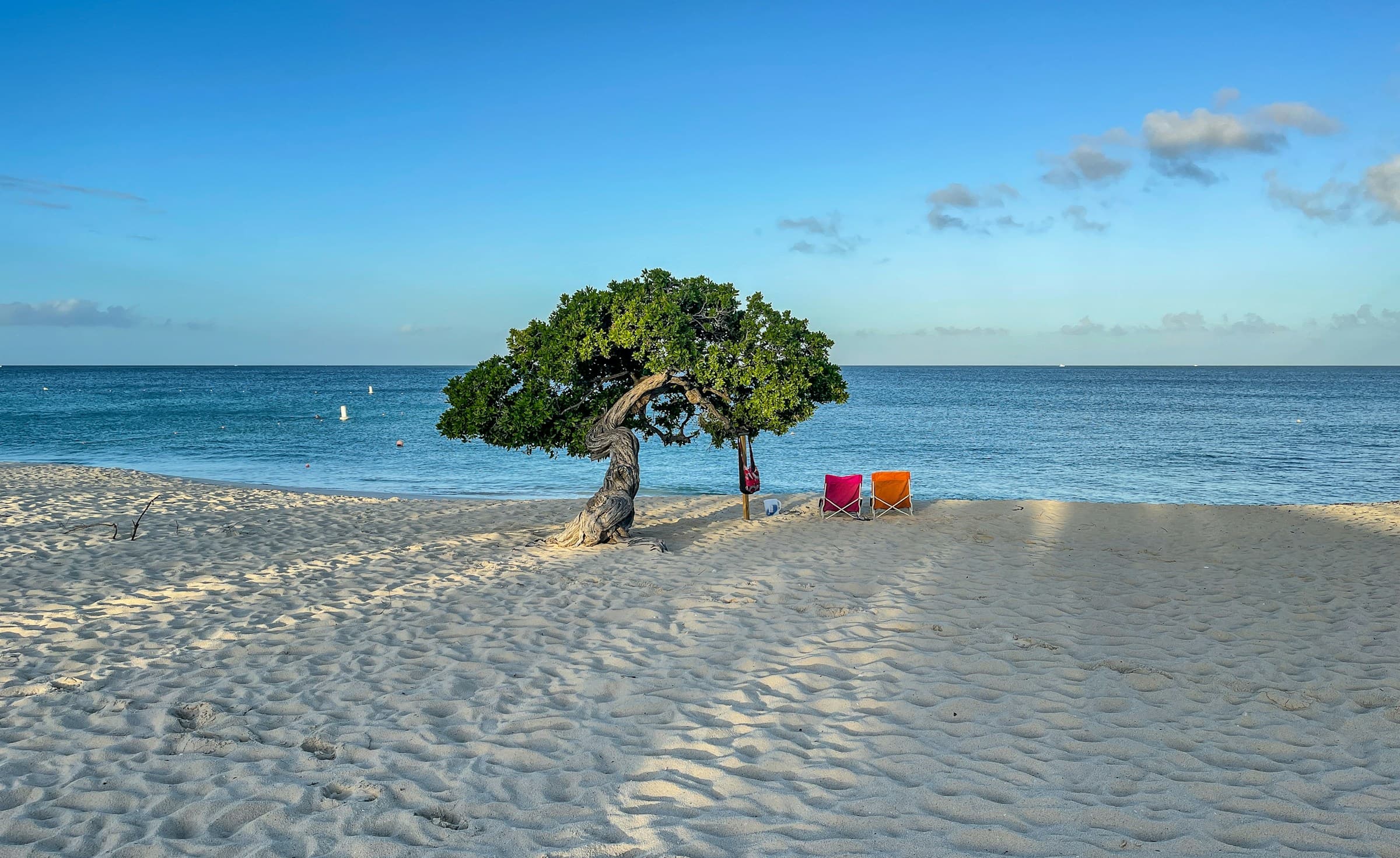
Eagle Beach consistently ranks among the best beaches in the Caribbean — and in the world. It's wider and quieter than neighboring Palm Beach, with soft white sand that stretches for nearly two miles. The iconic divi-divi (fofoti) trees, permanently bent by the trade winds, make it one of the most photographed beaches in the region.
Unlike Palm Beach, which is lined with high-rise hotels, Eagle Beach has a more relaxed low-rise vibe. You can rent chairs and umbrellas, or just lay out a towel on the open sand. The water is calm, clear, and perfect for swimming.
What it costs: Free to access. Chair and umbrella rentals run about $15–$25 per set. Grab lunch at a nearby beach bar for $15–$30.
2. Explore Arikok National Park
Arikok covers nearly 20% of Aruba's total land area, and it's unlike anything you'd expect from a Caribbean island. The landscape is rugged desert — giant boulder formations, towering cacti, ancient Arawak cave paintings, and dramatic coastline where waves crash against volcanic rock.
The park's highlights include the Natural Pool (Conchi) — a sheltered swimming hole formed by volcanic rock where ocean water pools calmly while waves pound the surrounding cliffs. The Fontein Cave features Arawak petroglyphs estimated to be over 1,000 years old. You can explore by foot, mountain bike, or guided UTV/ATV tour.
What it costs: Park entry is $11 per person. Guided UTV tours that include the Natural Pool run $100–$180 per person. Mountain bike rentals start around $40/day.
3. Take a UTV Off-Road Adventure
One of Aruba's most popular excursions, UTV tours take you off-road across the island's rugged northeast coast — terrain that regular rental cars can't handle. You'll bounce along dirt trails past the California Lighthouse, through Arikok National Park, to the Natural Bridge and the Natural Pool.
Most tours are half-day affairs (3–4 hours) and let you drive your own vehicle, which adds to the thrill. It's dusty, bumpy, and genuinely fun — one of those activities that feels more like an adventure than a tour.
What it costs: UTV rentals with a guided tour run $120–$200 per vehicle (seats 2). Self-guided UTV rentals start around $180–$250 for a full day. Book in advance during peak season (December–April) as they sell out quickly.
4. Snorkel at Baby Beach
Located at Aruba's southeastern tip, Baby Beach is a shallow, crescent-shaped lagoon protected by a natural breakwater. The calm, knee-deep water and excellent visibility make it the island's best snorkeling spot for beginners and families. You'll spot parrotfish, sergeant majors, and sea fans without even swimming far from shore.
For more adventurous snorkelers, the reef just beyond the breakwater offers deeper water and bigger marine life — but be cautious of currents there.
What it costs: Free to access. Snorkel gear rental at the beach runs $10–$15. If you don't have transport, taxi rides from the hotel zone cost about $40–$50 each way, or rent a car for $35–$50/day.
5. Visit Flamingo Beach on Renaissance Island
This is the one everyone posts on Instagram: a private island with pink flamingos wandering right up to you on the beach. Renaissance Island is exclusively for guests of the Renaissance Wind Creek Aruba Resort — but day passes are sometimes available (when they're not sold out, which is often).
The island has two beaches: Flamingo Beach (adults only) and Iguana Beach (family-friendly, with actual iguanas). It's undeniably touristy, but there's something genuinely delightful about feeding pellets to a flamingo while lounging in the Caribbean.
What it costs: Free for Renaissance hotel guests (65,000 Marriott Bonvoy points/night). Day passes for non-guests cost $125 per person when available — check the hotel front desk or app. Availability is limited and often sells out during peak season.
6. Catch Sunset at the California Lighthouse
The California Lighthouse sits on Aruba's northwestern tip, named after a steamship that sank nearby in 1891. Climb to the top for 360-degree views of the island — on clear days, you can see the coast of Venezuela. The real magic happens at sunset, when the sky erupts in orange and pink over the Caribbean Sea.
What it costs: Lighthouse entry is $5 per person. The surrounding area and sunset views are free.
7. Go Sailing on a Catamaran Cruise
Aruba's west coast is built for sailing — consistent trade winds, calm water, and a coastline that looks spectacular from the water. Catamaran cruises are one of the island's most popular activities, typically including stops for snorkeling, an open bar, and lunch or appetizers.
What it costs: Half-day catamaran cruises with snorkeling and open bar run $75–$120 per person. Sunset cruises cost $60–$90. Private charters start around $800–$1,200 for groups.
8. Wander Through Oranjestad
Aruba's capital city is a compact, colorful Dutch-Caribbean town that's perfect for a half-day stroll. Pastel-colored colonial buildings line the main streets, and the waterfront features a modern linear park with public art, shops, and restaurants.
The Archaeological Museum of Aruba provides a free crash course in the island's pre-Columbian history. Don't miss the street art scattered throughout downtown.
What it costs: Free to explore. The Archaeological Museum is free admission. Budget $20–$40 for lunch at a local restaurant. The free trolley runs a loop through downtown.
9. Ride the Atlantis Submarine
Aruba is one of only a handful of places in the world where you can board an actual submarine for a recreational dive. The Atlantis VI descends to about 130 feet, cruising past coral reefs, shipwrecks (including a deliberately sunken airplane), and schools of tropical fish.
What it costs: Adult tickets run approximately $109–$119 per person. Children (4–12) are about $79. The trip lasts roughly 2 hours including the surface boat transfer.
10. Try Aruba's Food Scene
Aruba punches well above its weight in dining. The island's food reflects its multicultural heritage — Dutch, Caribbean, Latin American, and Indonesian influences. Keshi yena (stuffed cheese), fresh seafood, and Dutch-Indonesian rijsttafel are must-tries.
For upscale dining, Papiamento serves Caribbean-French fusion in a restored 19th-century cunucu house. Zeerovers in Savaneta is the opposite vibe — a casual fish shack where you pick your catch and they fry it on the spot.
What it costs: Casual dining runs $15–$30 per person. Upscale restaurants average $50–$100. Zeerovers is about $12–$20 for a plate.
11. Windsurf or Kiteboard at Fisherman's Huts
Aruba's constant trade winds (averaging 15–20 knots) make it one of the Caribbean's premier windsurfing and kiteboarding destinations. Fisherman's Huts, just north of Palm Beach, is the main spot — shallow water and consistent wind create ideal conditions.
What it costs: Beginner windsurfing lessons run $60–$80 for 2 hours. Kiteboarding lessons start at $80–$120. Equipment rental is $40–$60 per hour.
12. Visit the Natural Bridge and Rock Formations
The smaller "Baby Bridge" remains intact and is still an impressive sight. The surrounding coastline on the northeast shore showcases Aruba's wild side — limestone cliffs, coral stone formations, and powerful waves.
Nearby, the Casibari and Ayo Rock Formations are clusters of giant diorite boulders that you can climb for panoramic views. They're sacred to the indigenous Arawak people and feature ancient carvings.
What it costs: Free to access. Allow 30–60 minutes for each site.
13. Party at Palm Beach
Palm Beach is the social heart of Aruba — a mile-long stretch lined with high-rise resorts, beach bars, and water sports operators. Jet skiing, parasailing, banana boats, and paddleboarding are all available steps from your chair.
What it costs: Beach access is free. Jet ski rentals run $60–$80 for 30 minutes. Parasailing costs $70–$90. Paddleboard rentals are $25–$40 per hour.
14. Take a Night Kayak Tour
Clear-bottom kayak tours take you out on the water at night with LED lights illuminating the reef below. You'll paddle over coral formations and watch fish, rays, and other marine life appear in the glow beneath you.
What it costs: Clear kayak night tours run $65–$85 per person for about 90 minutes.

How to Book Aruba With Points
Hyatt Regency Aruba Resort Spa & Casino — Best Value
Category 7 World of Hyatt property:- Off-peak: 25,000 points/night
- Standard: 30,000 points/night
- Peak: 35,000 points/night
Transfer path: Chase UR → Hyatt at 1:1. A four-night off-peak stay = 100,000 UR = $2,600+ in value.
Aruba Marriott Resort & Stellaris Casino
Around 70,000 Marriott Bonvoy points/night vs. $600 cash = about 0.86 CPP. Marriott does not waive the $65/night resort fee on award stays.Renaissance Wind Creek Aruba Resort
65,000 Marriott Bonvoy points/night vs. ~$450 cash. Worth it for the private flamingo island access.Getting There With Miles
- American Airlines: 12,500–30,000 AAdvantage miles one-way from MIA, CLT, DFW, PHL
- JetBlue: 15,000–25,000 TrueBlue points one-way from JFK, FLL, BOS
- United: 17,500–30,000 MileagePlus miles one-way via IAH or EWR
Practical Tips
Best time to visit: Aruba sits outside the hurricane belt — no bad time to go. Peak tourist season is December–April.
Getting around: Rent a car ($35–$50/day) for maximum flexibility. The island is small enough that nothing is more than 45 minutes away.
Currency: Aruban Florin (AWG), pegged to the USD. US dollars accepted everywhere.
Language: Dutch and Papiamento officially, but English and Spanish are widely spoken.
Bottom Line
Aruba delivers a rare combination: reliable weather, stunning beaches, genuine cultural depth, and one of the best points hotel redemptions in the Caribbean. The Hyatt Regency at 25,000 points off-peak is a steal — especially when cash rates top $650/night and Hyatt waives the resort fee.
Activities range from free (Eagle Beach, Oranjestad) to moderate ($65–$200 for UTV tours, catamaran cruises, and submarine dives). Book the Hyatt with Chase UR, grab a cheap AA award flight from Miami, and you've got a Caribbean luxury vacation at a fraction of the cash price.
Share this article
Travel.free Team
The Travel.free editorial team covers points strategy, destination guides, and deal alerts to help you travel better for less.
Stay in the Loop
Get the best travel points deals, island guides, and credit card strategies delivered weekly.
No spam, ever. Unsubscribe with one click.